Wet Lashes vs Classic Lashes: Which Set Suits You?
Wet-look sets and classic sets are built from different materials and produce different textures. Here is how the two compare on application, retention, fill schedule and price.
The short answer
Choose classic if you want your own lash line to simply read longer and darker. Choose a wet set if you want visible spikes and a slick, piecey texture. Wet is a styling method built on fine handmade fans, so it sits closer to hybrid pricing and usually wants a fill sooner.
Wet lashes vs classic at a glance
| Wet-look set | Classic set | |
|---|---|---|
| What gets attached | Two to four ultra-fine extensions (0.03–0.05 mm) closed into a spike, plus single lashes between them | One extension per natural lash, usually 0.15–0.18 mm |
| Finish | Separated spikes with visible gaps, like lashes just out of water | Even, uniform fringe with no gaps |
| Weight on the natural lash | Comparable to classic when fans are closed properly; heavier if the artist uses thick bases | Lowest of any style |
| Application time | Roughly 2 to 2.5 hours for a full set | Roughly 1.5 to 2 hours |
| Typical fill window | 2 to 2.5 weeks, because the spikes are the first thing to look untidy | 3 to 4 weeks |
| Priced as | Hybrid or light volume at most studios | Classic |
| Main drawback | The gapped look reads as sparse on already sparse lash lines | Cannot create texture or a spiked effect |
How they actually differ
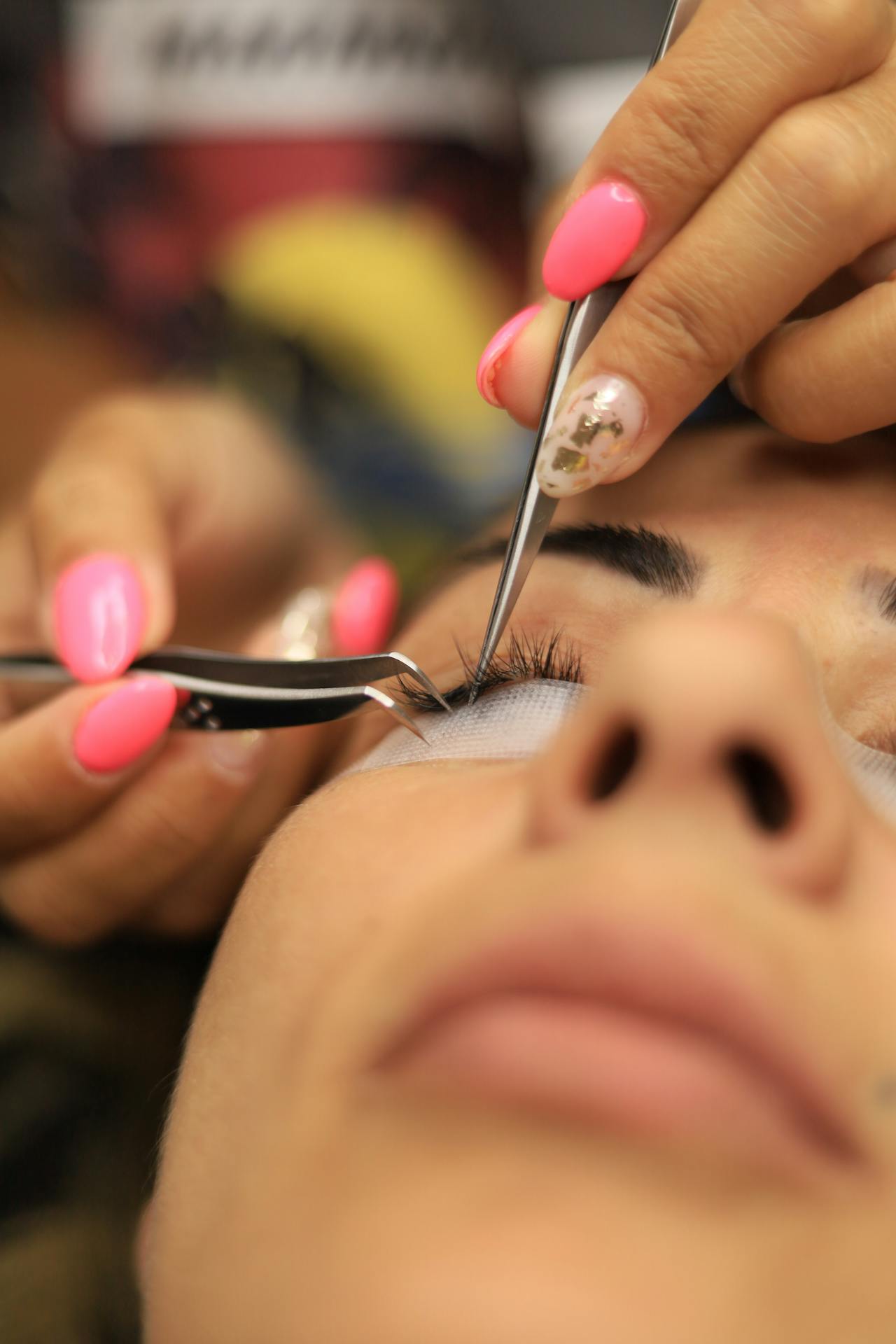
The difference is not the glue or the curl — it is what touches each natural lash. A classic set is strictly one-to-one. Your artist isolates a single natural lash, dips one pre-made extension, and bonds it from base to tip. Nothing is stacked, nothing is fanned, and the finished line is as dense as your own lash line and no denser.
A wet set breaks that rule deliberately. The artist picks up two to four very light extensions, pinches them so the tips stay closed rather than fanned open, and places that closed spike on a single natural lash. Between the spikes, shorter singles are laid flat. The eye reads the alternating tall spike and low filler as separation — the wet effect is really just controlled unevenness. Because the spikes are closed rather than open, a four-lash wet fan can weigh about the same as one 0.15 mm classic extension, which is why the technique is safe on healthy lashes when the diameters are chosen properly.
That construction also explains the retention gap. On a classic set, when one extension sheds you lose one lash of coverage out of a hundred and nobody notices for weeks. On a wet set, losing two or three spikes flattens the whole shape, because the design depends on those tall points. Nothing is wrong with the adhesive — the style is simply less forgiving of normal shedding, which runs about three to five natural lashes a day.
One more structural point: curl and length behave differently between the two. On a classic set the artist can run a C or D curl the full length of the lash line and the effect stays even. On a wet set the spikes are usually two to three millimetres longer than the filler lashes and often a flatter curl, because a tight curl on a tall spike collapses the wet illusion into an obvious fan. That is why a wet set booked without a mapping conversation frequently comes out looking spidery rather than slick.
What each one costs
Classic pricing is the best-documented tier. A classic full set runs a median of $150 across 15 salons, with most quotes landing between $100 and $180, and a classic fill runs a median of $80 across 14 salons.
Wet sets almost never get their own line on a menu. Studios bill them under hybrid, because the technique mixes handmade fans with singles: a hybrid full set carries a median of $165 across 8 salons, typically $133.75 to $180, and a hybrid fill a median of $87.50 across 8 salons. Across the wider sample of studios that publish only one generic fill rate, a lash fill runs a median of $60 across 22 salons. If a menu lists a wet set at a classic price, ask what the artist is actually applying — it is usually pre-made spikes rather than handmade ones.
Who should choose which
Go classic if your natural lashes are fine, sparse, or recovering from a heavy set, if you want a routine you can maintain on a monthly cycle, or if you need lashes that look correct in a passport photo and a wedding portrait alike. Classic is also the right call if you are new to extensions and do not yet know how your own shed cycle handles a fill schedule.
Go wet if you already have a dense natural lash line, if you refill every two weeks without complaint, and if the look you are chasing is editorial rather than natural. Wet sets photograph well and look intentional under strong light. They are the wrong choice on a lash line with visible gaps, because the style adds more separation to a line that already has too much of it.
There is also a maintenance question that settles this for a lot of people. Both styles need the same daily care — cleanse the lash line with a foaming lash shampoo each evening, brush them dry, and keep oil-based cleansers and cream removers away from the base. But on a classic set, skipping that routine for a week costs you retention. On a wet set it costs you the shape, because build-up at the base of a closed spike makes it splay open and the separation disappears. If a nightly two-minute lash routine is not going to happen, classic is the more forgiving investment.
Frequently asked questions
Do wet lashes damage your natural lashes?
How long do wet lashes last?
Can you get a wet look on a classic set?
Which one looks more natural in photos?
Can I switch from wet to classic at a fill?
Need a provider in your area?
Browse our directory and book directly with local businesses.
Browse the directoryRelated articles
Wet Lash Extensions vs Classic Lashes — Which Style Actually Suits You
The wet lash trend is the biggest extension shift of 2026. We break down how it differs from classic, hybrid, and volume lashes, who it works for, what it costs, and what to ask for at your appointment.
Wet Set vs Classic Lashes: Which Should You Choose?
Choosing between wet set and classic lash extensions can transform your appearance. This guide helps determine the best fit based on cost, longevity, and application.
Volume vs Hybrid Lashes: Which Set Fits
Volume lashes cost $200–$350 and look dense; hybrid lashes run $160–$280 and look natural. Compare wear time, fills, and damage risk before booking. Pick the right set.